
Rentajet delivers specialised underwater pile cutting across the UK and offshore using remotely operated abrasive water jet pile cutting technology. Operating since 1984, we cut hollow steel piles, windfarm monopiles, meteorological masts and sheet piles from the inside out below seabed or riverbed level without divers in the water. Our diver-free pile cutting rigs are mobilised from pontoons, jack-up barges and land-based platforms for marine decommissioning, offshore wind, civil engineering and port refurbishment projects.
As specialist underwater pile cutting contractors, Rentajet pioneered abrasive water jet pile cutting in the UK, with documented delivery on Blyth Wind Farm 3.2 m monopile cuts, North Sea met masts, Tilbury and Southampton Docks, Canary Wharf and River Tyne Tunnel.
Removing steel piles below bed level is one of the highest-risk operations on any marine project. Divers in the water, hot cutting in the splash zone, mechanical shears working blind below the seabed all carry programme risk, safety risk and environmental risk that owners increasingly refuse to accept.
Rentajet’s remotely operated abrasive water jet pile cutting removes the diver from the cut entirely. The rig is deployed from a solid platform, lowered down the inside of the pile and cuts the steel from the inside out below bed level. There is no heat, no hot work permit, no diver in the water, no excavation around the pile and no need to extract the pile above water before cutting. The cutting medium is inert garnet, with no chemical or environmental hazard to the marine environment.
That is what gets underwater pile cutting services specified on offshore wind decommissioning, port refurbishment and civil engineering projects where the cost of a diver-led incident or programme overrun is not acceptable.
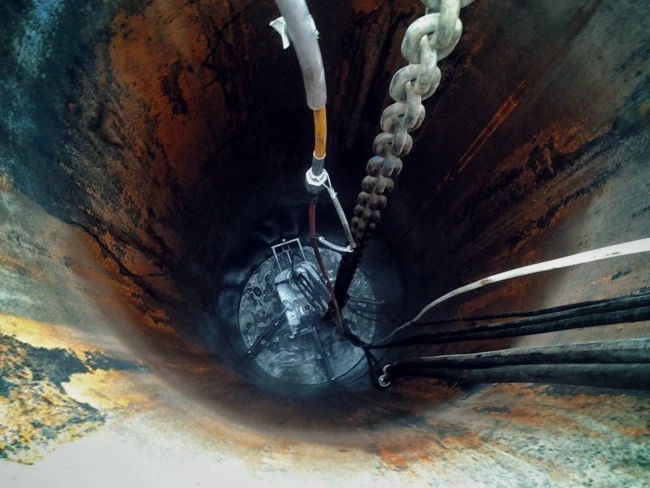
Rentajet operates a full range of underwater pile cutting services configured to the pile type, the diameter and the platform available on site.
Remote internal cuts on hollow circular steel piles and monopiles from 300 mm to over 4 metres in diameter, below seabed or riverbed level. Monopile cutting for offshore wind decommissioning and met mast removal.
Cutting of sheet piles, Larsen piles and combi-walls on jetties, marine terminals, cofferdams and temporary works. Sheet pile cutting made below riverbed or seabed level.
External abrasive jet cuts on circular and tubular piles where bed-level cuts are not required or where pile interior access is restricted.
End-of-life cutting of offshore wind monopiles, met masts and transition pieces, configured to the decommissioning programme with bespoke rigs engineered to the diameter.
In-house designed and fabricated cutting rigs for non-standard pile geometry, restricted access or specific environmental constraints. Bespoke abrasive water jet pile cutting carriers for the exact cut.
Diver-free pile cutting changes the safety, programme and environmental profile of marine and below-ground pile removal.
All cutting is run from a solid platform, removing the diver from the cut entirely.
Internal cutting head reaches below seabed or riverbed level with no need to dredge.
No heat input, no ignition risk and no hot work permit required.
Circular piles from 300 mm to over 4 metres, including thick-wall structural grades.
Garnet abrasive is environmentally neutral with no impact on the marine environment.
Clean cuts with minimal dressing required.
Diver-led oxy-fuel cutting, mechanical shears and diamond wire sawing remain the default on marine projects without specialist water jetting. Underwater pile cutting services by abrasive water jet carry a higher equipment day rate but remove the diver risk, the dredging requirement and the weather-window dependency.
| Factor | Abrasive Water Jet Pile Cutting | Diver-Led / Mechanical Cutting |
|---|---|---|
| Divers in the water | None, fully remote operation | Required, primary risk on the job |
| Heat and ignition risk | None, cold cut | High on oxy-fuel, hot work in splash zone |
| Cuts below bed level | Yes, internal cut, no excavation | Requires dredging or jetting around pile |
| Maximum pile diameter | Over 4 metres demonstrated | Limited by tool geometry on mechanical |
| Environmental impact | Inert garnet, no chemical hazard | Fuel risk, slag, embedded debris |
| Weather window dependency | Reduced, platform-based | High, dive-window critical |
| Cut quality | Clean, minimal dressing | Variable, often requires re-cut |
| Programme risk | Lower, no diver standby | High, weather and incident exposure |
Underwater pile cutting is specified wherever steel piles need to be removed without divers in the water or excavation around the pile.
Monopile cutting, met mast and transition piece cutting on operational and decommissioned offshore wind sites. Bed-level and below-bed cuts on monopiles up to over 4 metres diameter, including thick-wall structural sections.
Jetty pile, dolphin pile and quay wall sheet pile cutting on operational and end-of-life marine infrastructure. Includes temporary works extraction during port redevelopment.
Temporary diver-free pile cutting on bridge, tunnel and waterfront construction projects, including riverbed and culvert applications.

Rentajet delivers underwater pile cutting services to UK and overseas operators across the sectors where below-bed steel pile removal is part of the project scope.
Rentajet delivers underwater pile cutting services to UK and overseas operators across the sectors where below-bed steel pile removal is part of the project scope.
Marine and inland waterway diver-free pile cutting on infrastructure projects involving bridges, tunnels and waterfront access.
End-of-life pile cutting on jetties, dolphins, dock structures and offshore assets ahead of full marine clearance.
Temporary pile extraction on bridge, tunnel and waterfront projects, sheet pile cutting on cofferdam removal and riverbed pile trimming.
Subsea conductor, well head and structural pile cutting on platform decommissioning and oilfield plug-and-abandonment scopes.
Cooling water intake structures, marine outfall piles and water utility pile cutting on coastal and estuarine sites.
Rentajet pioneered abrasive water jet pile cutting in the UK and has delivered diver-free pile cuts on offshore wind fields, North Sea met masts, port refurbishment programmes and civil engineering projects since 1984.
Underwater pile cutting sits inside a wider water jetting capability that includes
abrasive water jet cold cutting, no dig blockage removal and hydrodemolition, so cutting teams arrive with the full scope of supporting services on the same mobilisation.
• Forty years of UHP water jetting experience: established 1984, documented
delivery on Blyth Wind Farm 3.2 m monopiles, North Sea met masts, Tilbury and
Southampton Docks, Canary Wharf and River Tyne Tunnel.
• In-house design and fabrication: bespoke cutting rigs engineered to pile diameter,
wall thickness and platform constraint, from 300 mm to over 4 metres diameter.
• Remote operation from solid platform: pontoons, jack-up barges or land-based
deployment, no divers in the water at any stage of the cut.
• ISO 9001, ISO 14001 and ISO 45001 registered: Water Jetting Association
membership and full adherence to the WJA Code of Practice.
• UK-wide and offshore mobilisation: Romsey HQ with London and Manchester
support, documented offshore wind and overseas project delivery.
The result is a contractor that marine, offshore and civil engineering procurement leads can specify with confidence on underwater pile cutting scopes where diver risk and below-bed cut quality are critical.

Rentajet follows a five-step process on every underwater pile cutting mobilisation.
We survey the pile type, diameter, wall thickness, seabed or riverbed depth, platform availability and environmental constraints. Method statement and risk assessment produced covering marine operations and water management.
Off-the-shelf or bespoke cutting rigs configured to the pile geometry. Pumps, hoses, abrasive feed and the cutting head mobilised to the platform under a controlled lift plan.
Cutting rig deployed down the pile interior or rigged externally. Pump pressure, abrasive flow, traverse speed and cut depth set to specification and signed off. Pump units run at up to 2,800 bar.
The operator runs the diver-free pile cutting process remotely from the platform. The cutting head traverses the pile circumference at the specified depth below bed level, producing a full-section cut. Cut quality monitored remotely throughout.
Cut pile section lifted and recovered under marine lift plan. Cut edges inspected, photographic records and cut reports issued, rig demobilised under controlled lift plan.