
RGL Services delivers line marking removal services across the UK using ultra-high-pressure water jetting at up to 2,800 bar. Operating since 1984, we remove thermoplastic and paint-based road markings from highways, runways, car parks and industrial floors without grinding, scarifying or leaving ghost lines in the substrate. Our handheld and robotic systems strip markings cleanly in a single pass on tarmac, concrete, block paving and specialist airport pavement, leaving a surface ready for re-marking or resurfacing.
As specialist line marking removal contractors, we combine high-production robotic systems with handheld lance capability under one contractor, deploying both on the same job where the surface type and access require it. Rentajet is mobilised nationwide, with Romsey, London and Manchester coverage and a direct response service for planned schemes and urgent requirements.
Grinding and scarifying remove road markings but they remove surface material with them. On block paving, that means broken aggregate and an uneven substrate. On tarmac, it means micro-cracking that accelerates surface wear and leaves a texture mismatch that shows through the new marking. On airport pavement, neither is acceptable, and the CAA and aerodrome operators require a removal method that does not compromise friction or pavement integrity.
Ultra-high-pressure water jetting at 2,800 bar removes thermoplastic marking and paint-based markings through hydraulic pressure, not abrasion. The jet breaks the bond between the marking and the substrate without cutting into the surface below it. The result is a clean substrate with no ghost lines, no surface damage and no residual marking material, ready for re-marking in the same shift.
That combination is what gets UHP line marking removal specified on strategic road network schemes, airport pavement programmes and local authority contracts where surface condition after removal is as important as the removal itself.
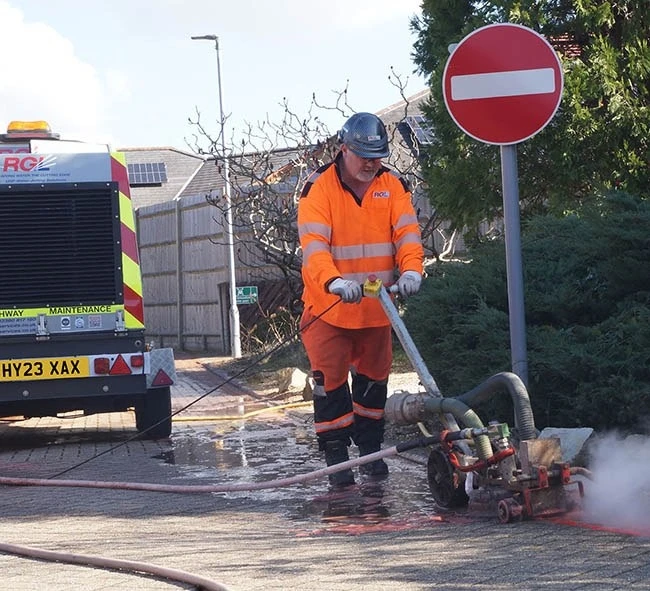
Rentajet operates a full range of UHP line marking removal services configured to the marking type, the substrate and the access on site.
High-production UHP removal of thermoplastic markings on A-roads, motorways, strategic road network schemes and local highway maintenance programmes. Single-pass removal at 2,800 bar on standard carriageway markings, with no surface damage to the tarmac substrate.
Specialist removal of runway centreline markings, threshold bars, touchdown zone markings, taxiway edge markings and apron painted markings on concrete and asphalt airport pavement. Removal to CAA and aerodrome operator specification, leaving friction-critical pavement intact.
Removal of paint and thermoplastic bay markings, directional arrows, pedestrian crossings and hazard markings from car park decks, warehouse floors, factory floors and distribution centre surfaces. Suitable for both outdoor and covered operational environments.
Trace-free removal of pedestrian crossing markings, zebra crossing bars, cycle lane markings and public realm painted lines from block paving, concrete and clay paving surfaces. Used on urban realm schemes, streetscape works and highway improvement projects where surface aesthetics matter.
Targeted ghost line removal of faded, failed or redundant markings left by previous grinding or scarifying operations. UHP jetting removes residual marking material that grinding cannot reach without cutting further into the substrate.
Removal of complex or geometric markings on roundabouts, junction layouts, pedestrian priority areas and shared-space surfaces where programmed robotic coverage needs to be supplemented with handheld lance work on detail areas.
UHP water jetting changes the safety, quality and substrate profile of line marking removal compared with grinding and scarifying.
The jet removes the marking and stops at the substrate, with no cutting, abrasion or micro-cracking of the surface below.
Complete removal of thermoplastic and paint markings in a single pass, with no ghost lines left in the substrate.
No grinding media, abrasive or chemical residue is left in the surface, which matters on airport pavement and food-grade industrial floors.
Block paving, airport pavement, decorated or textured surfaces can be treated without physical abrasion to the substrate.
No percussive vibration is transmitted to operators, removing the shift-rotation requirement and daily vibration exposure points of grinding equipment.
The cleaned substrate is ready for thermoplastic or paint application without further preparation or waiting.
Grinding, scarifying and chemical stripping remain the default on schemes without specialist water jetting capability. They are familiar to highway contractors but all three damage the substrate to some degree, with grinding leaving micro-cracking, scarifying removing surface aggregate and chemical stripping requiring extended dwell time and hazardous waste disposal. UHP water jetting carries a higher equipment day rate but delivers a clean, undamaged substrate in a single pass, which on most highway and airport schemes makes it the lower total risk route.
| Factor | UHP Water Jetting | Grinding / Scarifying / Chemical |
|---|---|---|
| Surface damage | None, jet stops at substrate | Micro-cracking on grinding, aggregate removal on scarifying |
| Ghost lines | None, full trace-free removal | Common on grinding, varies with operator and pass count |
| Suitability on block paving | Yes, no abrasion to paving units | High risk of surface damage |
| Suitability on airport pavement | Yes, CAA-acceptable method | Restricted, friction and texture implications |
| HAVS risk to operator | None, no percussive vibration | High on grinding, shift rotation required |
| Dust generation | None, water-suppressed | Significant on grinding and scarifying |
| Residual material after removal | None, surface chemically clean | Grinding dust and abrasive residue in surface |
| Substrate ready for re-marking | Immediately after removal | Cleaning and preparation usually needed |
UHP line marking removal is specified wherever road, runway or floor markings need to be removed without damaging the surface underneath. Rentajet delivers across three primary application sectors.
Removal of thermoplastic and painted carriageway markings on A-roads, trunk roads, motorway smart upgrades and local highway improvement schemes. Used on lane reconfiguration, junction redesign and road safety upgrade projects where full marking removal is required before new layouts can be installed.
Removal of runway, taxiway, apron and stand markings on commercial airports, military airfields and private aerodromes. Used on routine remarking programmes and on pavement rehabilitation schemes where marking removal is part of a wider surface treatment scope.
Removal of bay markings, pedestrian crossing markings, directional arrows and hazard markings from car park decks, warehouse floors and public realm paving. Used on refurbishment, repurposing and layout change schemes across commercial, industrial and public sector sites.
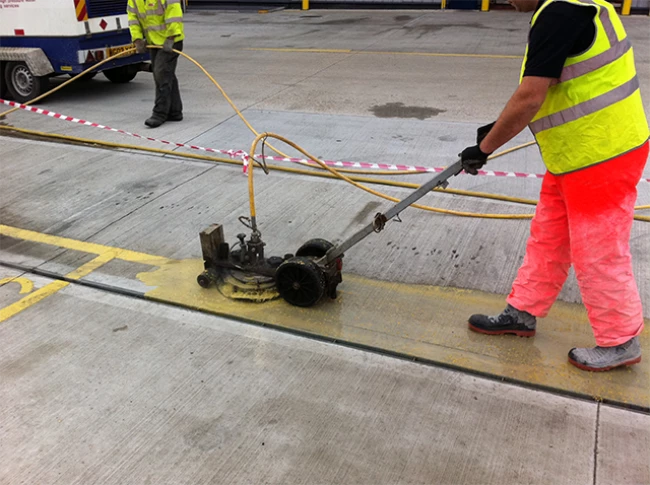
Rentajet delivers traffic line marking removal to UK operators across the sectors most reliant on accurate, damage-free marking removal.
Strategic road network programmes, local authority highway maintenance, airport pavement management and airfield operations. Removal to DfT, Highways England and CAA specification where required.
Highway infrastructure schemes, urban realm works, bridge deck waterproofing preparation and junction improvement projects where marking removal is part of a wider civil engineering scope.
Floor marking removal on industrial, commercial and public sector sites ahead of demolition, change of use or repurposing. Includes warehouse, factory and distribution centre floors.
Marking removal on substations, power station forecourts, utility compound and operational areas where surface condition and safety signage require periodic updating.
Hygienic floor marking removal in food production, packaging and distribution facilities where marking changes are required without chemical stripping agents or abrasive residue.
Marking removal on refinery roads, chemical plant compounds, tank farm access roads and heavy manufacturing floors where surface integrity and contamination control are required.
RGL Services has been delivering water jetting services to UK highways, aviation and industrial sectors since 1984 and operates one of the most comprehensive UHP line marking removal fleets in the UK, covering high-production robotic systems, handheld lance capability and trailer-mounted units for rapid mobilisation on highways schemes.
Line marking removal sits inside a wider water jetting capability that includes concrete surface preparation, hydrodemolition and industrial cleaning, which means line marking removal teams arrive with the full scope of supporting services on the same mobilisation.
• Forty years of UHP water jetting experience: established 1984, with delivery across UK drainage, sewer and flood-prevention systems.
• Precision in-pipe cutting: purpose-built rigs that cut concrete, piles and debris in pipes from 95mm upwards without excavation.
• ISO 9001, ISO 14001 and ISO 45001 registered: Water Jetting Association membership and full adherence to the WJA Code of Practice.
• Bespoke rig engineering: custom tooling designed to the site conditions and obstruction type on complex projects.
• UK-wide mobilisation: Romsey HQ with London and Manchester support, and a direct response service for blocked critical systems.
The result is a contractor that highways authorities, airport operators and principal contractors can specify with confidence on marking removal scopes where substrate condition after removal is part of the deliverable.
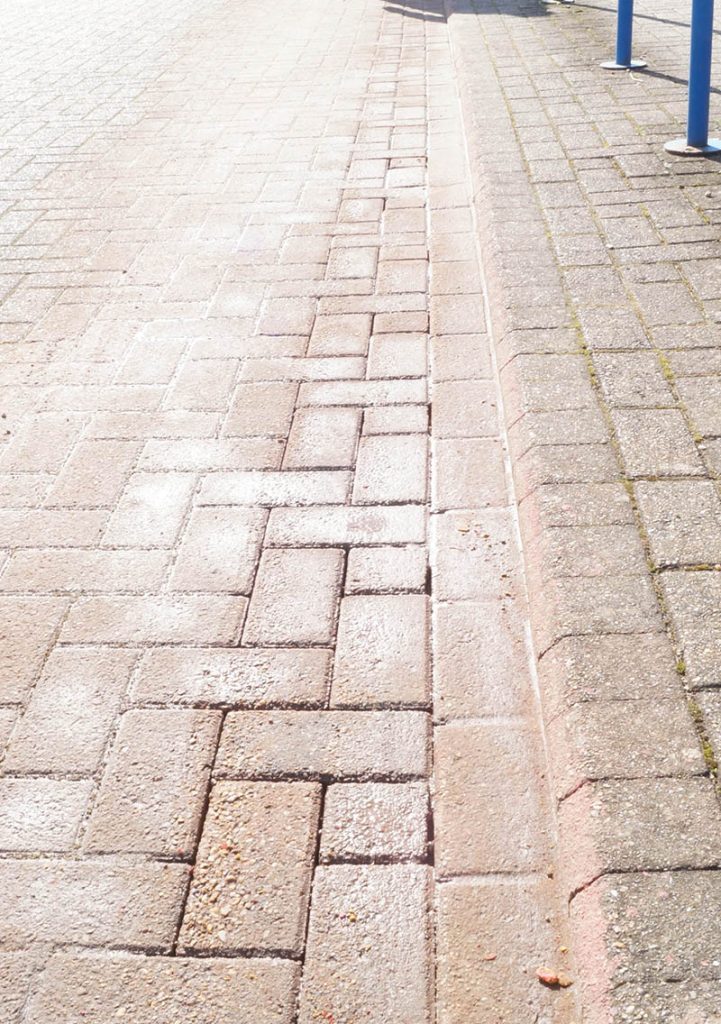
Rentajet follows a five-step process on every line marking removal mobilisation, from initial
enquiry through to surface sign-off.
We survey the surface type, marking specification, extent and condition, and confirm the removal method against the substrate. A method statement and risk assessment are produced covering traffic management, water management and WJA Code of Practice compliance.
UHP pumps, robotic or handheld removal equipment and water management plant are mobilised to site. Pump units run at up to 2,800 bar, with all hoses and connections inspected under WJA Code of Practice. Traffic management is coordinated in advance of each shift.
A trial area is completed on the surface type to confirm pump pressure, nozzle configuration and traverse speed against the marking type. The trial is signed off with the client or resident engineer before bulk removal starts.
Robotic or handheld equipment is operated across the removal area to strip markings to a trace-free finish. Process water is contained and managed under the agreed water management plan. Progress is monitored and the surface condition is checked against the agreed specification at regular intervals.
The surface is washed down and inspected for ghost lines or residual material against the removal specification. A photographic record and removal report are issued to the client or principal contractor ahead of re-marking or resurfacing.
Cost depends on surface type, marking type, area, access and traffic management requirements. UHP water jetting carries a higher equipment day rate than grinding but typically delivers a lower total project cost on substrate-sensitive scopes by removing the risk of surface damage, re-preparation and ghost line remediation. Contact us for a project-specific quotation.
No. UHP water jetting removes the marking through hydraulic pressure without abrasion to the substrate below it. The method is routinely used on block paving, airport pavement and polished concrete where grinding or scarifying would cause unacceptable surface damage. A trial area is always completed to confirm settings before bulk removal starts.
Yes. Ghost lines left by grinding are residual marking material embedded just below the surface level. UHP jetting at 2,800 bar reaches this material and removes it without cutting further into the substrate. This is one of the most common reasons UHP water jetting is specified as a second-pass method on schemes where grinding has already been used.
High-production robotic systems remove standard thermoplastic carriageway markings at rates suited to single-shift programme windows. Exact production rates depend on marking type, substrate condition and access. We quantify expected duration and shift requirements in the project method statement, and our systems are configured to work within standard traffic management windows on live carriageway.
Yes. UHP water jetting is an accepted method for runway and taxiway marking removal on UK and international aerodromes. The method removes marking material without compromising pavement friction or surface texture, which is the primary requirement for any removal operation on airfield pavement. We operate to aerodrome operator specification and produce a surface condition sign-off on completion.