
RGL Services delivers steel surface preparation across the UK using ultra-high-pressure water jetting at up to 2,800 bar. Operating since 1984, we remove old coatings, rust and corrosion from storage tanks, process vessels, columns, bridges and marine structures without grit, dust or abrasive media, leaving a clean profile ready for recoating. Our handheld and remotely operated limpet jetting robots achieve the Wa2 surface preparation standard recognised by major coating manufacturers.
As specialist steel surface preparation contractors, we combine high-production robotic systems with handheld lance capability under one contractor, working on vertical, horizontal and curved surfaces including live tanks and zoned hazardous areas. Rentajet is mobilised nationwide, with Romsey, London and Manchester coverage and a direct response service for planned shutdowns and urgent requirements.
Grit blasting prepares steel but it brings problems with it. It generates heavy airborne dust, demands extensive containment and scaffolding, embeds abrasive media in the surface, and produces large volumes of contaminated waste. On live tanks and in zoned hazardous areas it often cannot be used at all.
Ultra-high-pressure water jetting at 2,800 bar removes coatings, rust and corrosion through water pressure, not abrasion. It leaves no grit in the profile, generates no airborne dust, and exposes the original surface profile without cutting into sound steel. The process simultaneously vacuums wastewater and debris for contained disposal.
That is what gets UHP steel surface preparation specified on storage tanks, process vessels and marine structures where dust, containment and abrasive contamination would otherwise stop or slow the job.
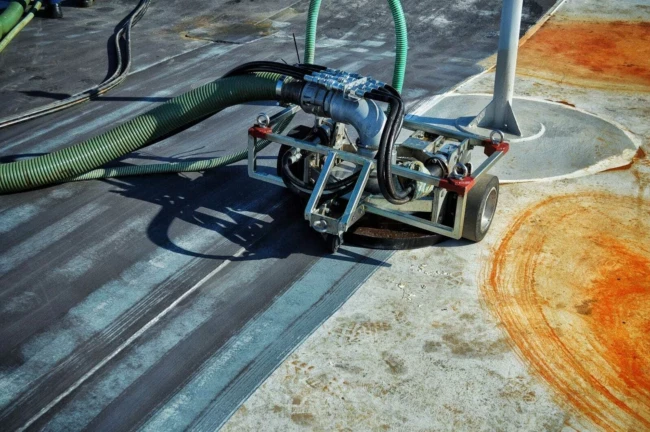
Rentajet operates a full range of UHP steel surface preparation services configured to the structure, the coating and the access on site
Coating removal from steel on the internal and external surfaces of storage tanks, process vessels and columns across refineries and terminals. Suitable for live tanks and zoned hazardous areas.
Coating removal on bridges, gantries and structural steelwork ahead of repainting. Dust-free working suits structures over live traffic or operational areas.
Hull, deck and topsides coating removal on ships, barges and offshore structures. No abrasive residue and salt-contaminated coatings removed to a clean profile.
Remotely operated, hydraulically driven jetting robots that work vertical, horizontal and curved areas at production rate from a safe operator distance.
Preparation to the recognised water jetting cleanliness standards required by major coating manufacturers. Surface profile and flash rust grade confirmed against the coating specification.
Engineered jetting carriers for non-standard geometries and confined access where off-the-shelf tooling is not viable.
UHP water jetting changes the safety, environmental and programme profile of preparation compared with grit blasting
No airborne dust, improving site safety and simplifying work near occupied or operational areas.
No grit left in the profile, removing a common cause of premature coating failure.
Far less containment than blasting, lowering cost and programme time on large structures.
Meets the water jetting cleanliness standard required by most coating manufacturers.
Wastewater and debris vacuumed and contained at source, no spent abrasive to remove.
No sparks or heat, usable on live tanks and in zoned areas where blasting cannot.
Grit blasting remains the default on sites without specialist water jetting. It is familiar but generates dust and abrasive waste, embeds media in the surface, and demands heavy containment. UHP water jetting carries a higher equipment day rate but removes the dust, containment and abrasive-disposal burden, making it the lower total cost route on most tank, marine and structural scopes.
| Factor | UHP Water Jetting | Grit Blasting |
|---|---|---|
| Airborne dust | None, water-suppressed | Heavy, requires extensive containment |
| Abrasive in surface profile | None | Embedded grit, can cause coating failure |
| Use on live tanks | Yes, no sparks or heat | Restricted or not permitted |
| Containment and scaffolding | Minimal | Extensive |
| Waste produced | Contained wastewater and debris | Large volumes of spent abrasive |
| Cleanliness standard | Wa2 / Wa2.5 water jetting standard | Sa2.5 abrasive standard |
| Flash rust on completion | Present, controlled to specification | None until recoating window lapses |
| Surface ready for recoating | After flash rust grade is confirmed | After full cleanup of abrasive |
UHP steel surface preparation is specified wherever coatings, rust or corrosion need removing from steel without dust, abrasive contamination or heavy containment. Rentajet delivers across three primary application sectors.
Internal and external coating removal from steel on aboveground storage tanks, process vessels and columns across refineries, terminals and chemical plants.
Coating removal on highway and rail bridges, gantries and structural steelwork. Dust-free working suits structures over live traffic or operational areas.
Hull, deck and topsides preparation on ships, barges and offshore structures, removing salt-contaminated coatings without abrasive residue.
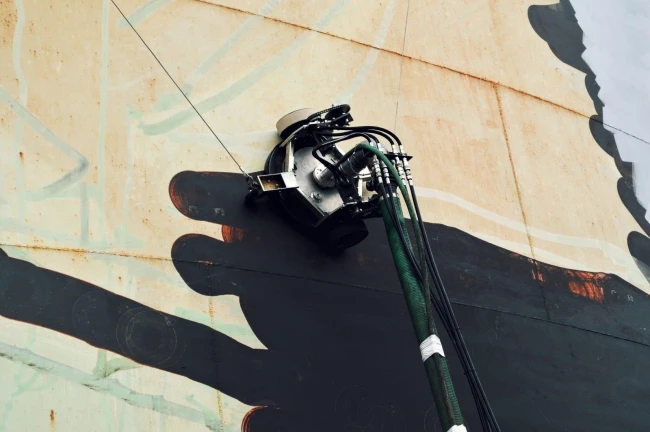
Rentajet delivers water jetting steel cleaning to UK operators across the sectors most reliant on durable, contamination-free coatings.
Tank and vessel coating removal on refineries, terminals and chemical plants, including live tanks and zoned hazardous areas.
Hull, deck and topsides preparation in shipyards and on offshore structures, removing salt-contaminated coatings without abrasive media.
Bridge, gantry and structural steel preparation on highway and rail networks where dust suppression and minimal containment are required.
Preparation of steelwork, penstocks and plant structures during outages across coal, gas, biomass and Energy-from-Waste sites.
Structural steel preparation on construction and heavy manufacturing sites where coating adhesion and contamination control matter.
Clearance of blocked drainage, interceptor and overflow lines on refineries and terminals
where access for excavation is restricted.
RGL Services has been delivering water jetting services to UK heavy industry since 1984 and operates one of the most comprehensive UHP steel surface preparation fleets in the UK, including remotely operated limpet jetting robots.
Steel surface preparation sits inside a wider water jetting capability that includes
tank, vessel and column cleaning, hydrodemolition and industrial cleaning, so preparation teams arrive with the full scope of supporting services on the same mobilisation.
• Forty years of UHP water jetting experience: established 1984, delivery across UK refineries, marine structures and bridge programmes.
• Remotely operated limpet jetting robots: hydraulically driven systems that prepare large vertical and curved surfaces from a safe distance, including live tanks.
• ISO 9001, ISO 14001 and ISO 45001 registered: Water Jetting Association membership and full adherence to the WJA Code of Practice.
• Coating-standard methodology: preparation to the Wa2 and Wa2.5 water jetting
standards with surface sign-off on handover.
• UK-wide mobilisation: Romsey HQ with London and Manchester support, and a
direct response service for shutdowns and urgent requirements.
The result is a contractor that asset owners, coating specifiers and principal contractors can specify with confidence on steel surface preparation scopes where coating life depends on a clean, uncontaminated profile.
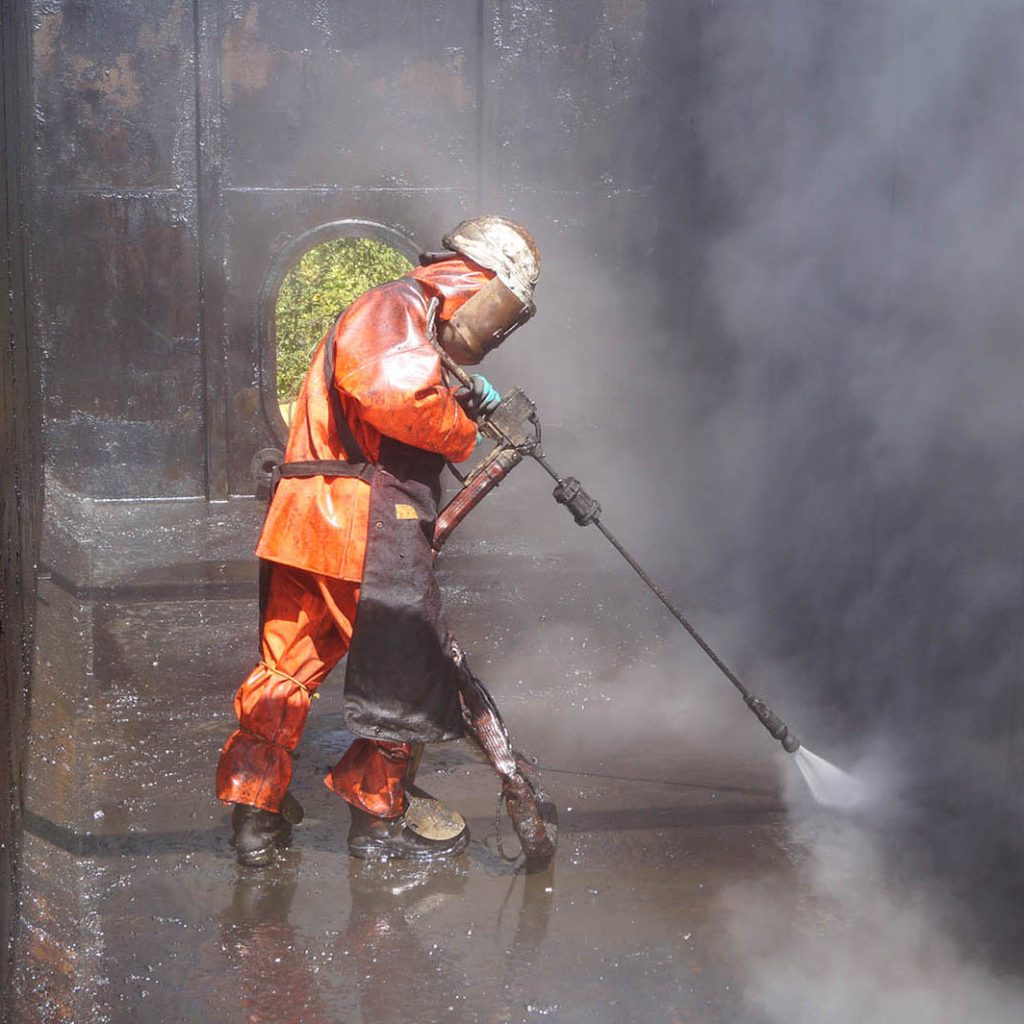
Rentajet follows a five-step process on every mobilisation, from initial enquiry through to surface sign-off.
We survey the structure, the existing coating, the substrate condition and the access, and confirm the cleanliness standard against the coating specification. Method statement and risk assessment produced to WJA Code of Practice.
UHP pumps, limpet robots or handheld equipment and vacuum recovery plant mobilised to site. Pump units run at up to 2,800 bar.
Trial area completed to confirm pump pressure, traverse speed and achieved cleanliness standard. Signed off with the client or coating inspector before bulk preparation.
Robotic or handheld equipment removes coatings, rust and corrosion to the agreed standard. Wastewater and debris vacuumed and contained at source. Profile and flash rust grade checked against specification.
Surface inspected against the cleanliness standard and flash rust grade, photographic record issued, surface handed over inside the recoating window.
Cost depends on the structure, coating, surface area, access and containment requirements. UHP steel surface preparation carries a higher equipment day rate than grit blasting but typically delivers a lower total project cost by removing the containment, abrasive supply and waste-disposal burden. Contact us for a project-specific quotation.
UHP water jetting achieves the Wa2 surface preparation and Wa2.5 standards, accepted by most major coating manufacturers. We confirm the achieved standard and flash rust grade in a trial area before bulk work begins.
Water jetting exposes the original surface profile and produces controlled flash rust, graded against the coating specification. We hand the surface over inside the agreed recoating window.
Yes. UHP water jetting produces no sparks and no heat, so it can be used on live tanks and in zoned hazardous areas where grit blasting is restricted. Our limpet robots are operated remotely from a safe distance.
Water jetting produces no airborne dust and no spent abrasive, and wastewater is contained at source. This removes most of the sheeting, encapsulation and abrasive cleanup that grit blasting requires.